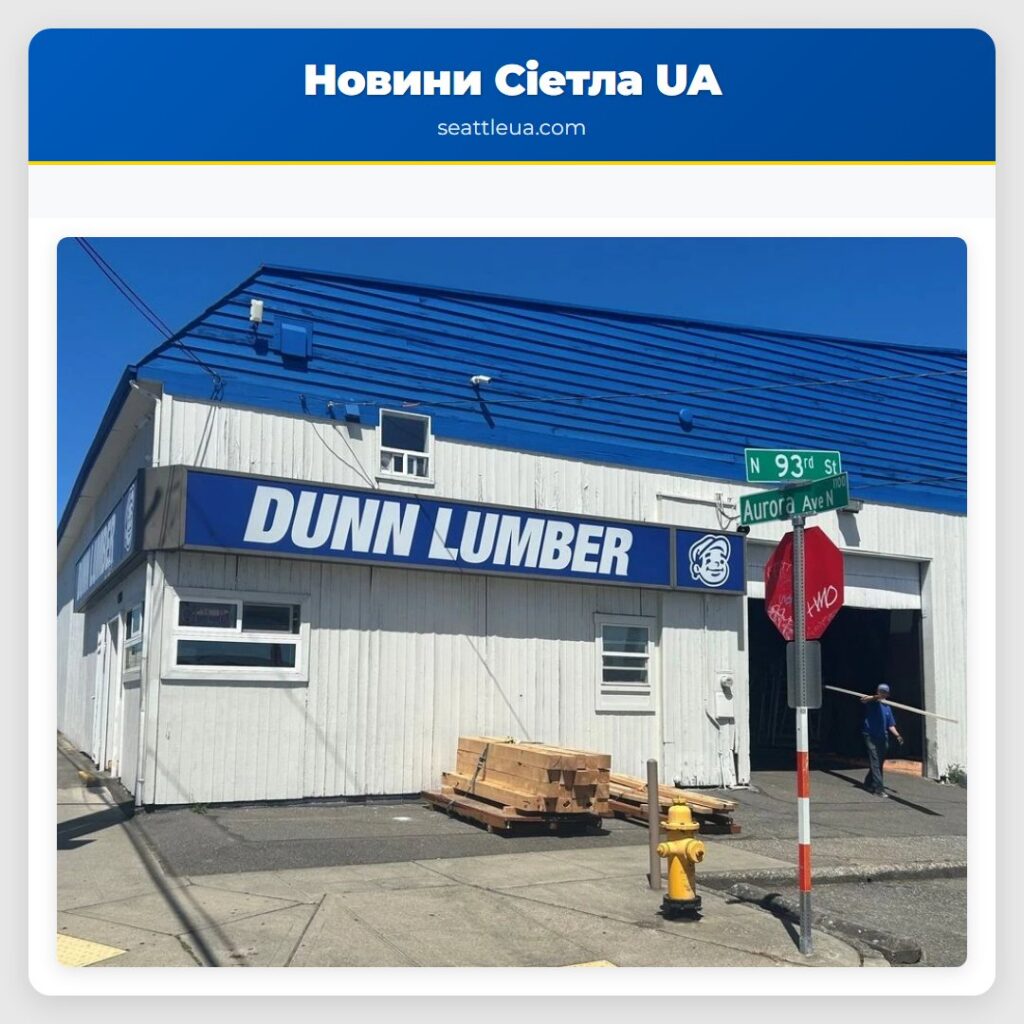
SEATTLE – A Seattle business owner whose family’s ties to the city stretch back more than a century is taking an unusual step to combat sex trafficking and gun violence outside one of his stores along Aurora Avenue.
Mike Dunn, CEO of Dunn Lumber, plans to install a large banner at the company’s location at 9300 Aurora Ave. N. as part of a campaign aimed at discouraging people from buying sex along one of Seattle’s most troubled corridors.
Dunn said employees at the store routinely witness sex trafficking activity, including what appear to be underage girls being exploited in plain sight.
“We are regularly seeing very young girls, mostly unclothed, standing on the corner trying to solicit business,” Dunn said. “And we’re hearing gunshots during the day. It’s not just at night.”
The effort comes as Seattle prepares to host visitors during the FIFA World Cup, a period that anti-trafficking advocates said could increase demand for commercial sex and lead to more exploitation.
The banner campaign is being organized by The More We Love in partnership with the marketing agency DNA&STONE. The initiative seeks to reduce sex trafficking by targeting buyers rather than victims.
The banner Dunn plans to display is designed to be provocative and unsettling, reminding potential buyers that their actions are being observed.
A photo of Aurora Ave on June 11, 2026. Seattle City Attorney Erica Evans had warnings for people committing or enabling crimes. She said Johns or buyers coming to Aurora Avenue to buy children or people would be arrested and prosecuted.
“The only way that actually dissuades people from buying sex is something that indicates they might be caught, something that reminds them that people are actually watching,” Dunn said. “So this banner is basically a reminder. They are going to be up around the city and we’re participating because we think it might make a difference.”
Campaign organizers said the messaging intentionally mirrors language and marketing tactics often used by traffickers, creating what they describe as a disruptive message intended to challenge behavior and discourage exploitation.
Dunn said his company is also paying to place advertisements on televisions in local hotel rooms during the World Cup.
“The idea is basically you walk in the door and that will be the opening screen,” Dunn said. “So we’re buying that time during FIFA so that if a guy takes a girl in there, she’s going to see that, he’s going to see it.”
The campaign comes as city leaders escalate efforts to address prostitution activity and gun violence that have plagued Aurora Avenue in recent months.
On Thursday, FBI agents joined Seattle police officers to conduct outreach to women and girls working along the corridor.
Seattle Mayor Katie Wilson has ordered several side streets closed to vehicle traffic in an effort to prevent armed traffickers from using residential neighborhoods as escape routes during shootings. Residents have reported bullets striking homes during what officials describe as rolling gun battles between rival traffickers.
Seattle Police Chief Shon Barnes said the department will increase investigative work, deploy additional nightly patrols and assign bike officers to focus on sex trafficking activity along Aurora.
Dunn welcomed the increased attention but said he remains skeptical.
“They are obviously ambiguous about whether police can handle the problem or not,” Dunn said. “I think we need more cops and we need more attention.”
City officials said permanent barricades are expected to be installed within several weeks on North 96th, 98th, 100th, and 102nd streets.
Seattle City Attorney Erika Evans also announced plans to use the city’s chronic nuisance property law against businesses that repeatedly support or facilitate sex trafficking activity. Four motels along Aurora have been shut down under the ordinance during the past five years.
In addition, Evans is seeking funding for a full-time prosecutor dedicated to gun removal efforts. The prosecutor would pursue Extreme Risk Protection Orders, commonly known as ERPOs, against individuals who are committing violence along Aurora.
The court orders, often used in domestic violence and mental health cases, allow judges to temporarily prohibit individuals from possessing firearms even when criminal charges have not been filed. Violating an order can result in felony charges.
Using ERPOs against suspected traffickers would represent a unique approach aimed at disrupting violence with a lower burden of proof than criminal prosecution.
Officials acknowledge that enforcement alone will not solve the problem.
According to the King County Prosecuting Attorney’s Office, prosecutors filed 427 felony cases along the Aurora corridor between Seattle’s northern city limits and the north end of Green Lake from 2024 through May 21 of this year.
Those cases included 99 felony assaults, 30 unlawful gun possession cases, 44 residential and commerci…
поділитися в твіттері: Dunn Lumber CEO to post provocative anti-sex-buying banner at Aurora Avenue store